
A sudden cold shower is often the first sign that something is wrong with your water heater. In Singapore, where water heaters are used daily due to frequent showers and high humidity, small issues can turn into serious safety and repair problems if ignored. Many homeowners delay action, hoping the problem will fix itself, but water heaters rarely recover without attention. Knowing when you need to fix the water heater helps you avoid leaks, electrical risks, and high replacement costs. This guide explains how to identify early warning signs, understand your heater type, and decide the right time for repair, all based on real conditions in Singapore homes.
Types of Water Heaters Commonly Used in Singapore
Most homes in Singapore use either instant water heaters or storage water heaters, and each type develops problems in different ways. Understanding which one you have makes it easier to identify faults and decide whether repair or replacement is the better option.
Instant Water Heaters in Singapore Homes
Instant water heaters heat water only when needed and are commonly installed in HDB bathrooms due to their compact size. These units rely heavily on electrical components, which means issues often appear suddenly. Power trips, unstable water temperature, or no hot water at all are common complaints.
Frequent causes of instant heater problems include:
- Faulty heating elements
- Loose internal wiring
- Damaged circuit boards
- Water flow sensor failure
Because instant heaters work directly with electricity and water, repairs should always be handled by trained professionals. Improper handling can cause electric shock or permanent damage to the unit.
Storage Water Heaters in Singapore Homes
Storage water heaters store heated water in a tank and are more common in condos, landed homes, and larger households. These systems face different challenges because water sits inside the tank for long periods. Over time, sediment buildup and internal corrosion become common issues.
Typical storage heater problems include:
- Slow heating
- Rusty or cloudy hot water
- Leaks near the tank
- Pressure relief valve issues
Older storage heaters are more likely to leak due to internal tank wear. Once the tank itself is damaged, repair is no longer possible, and replacement becomes necessary.
Common Signs You Need to Fix the Water Heater
Water heaters usually give warning signs before failing. Paying attention to these signs helps reduce repair costs and prevents water damage.
No Hot Water or Sudden Temperature Changes
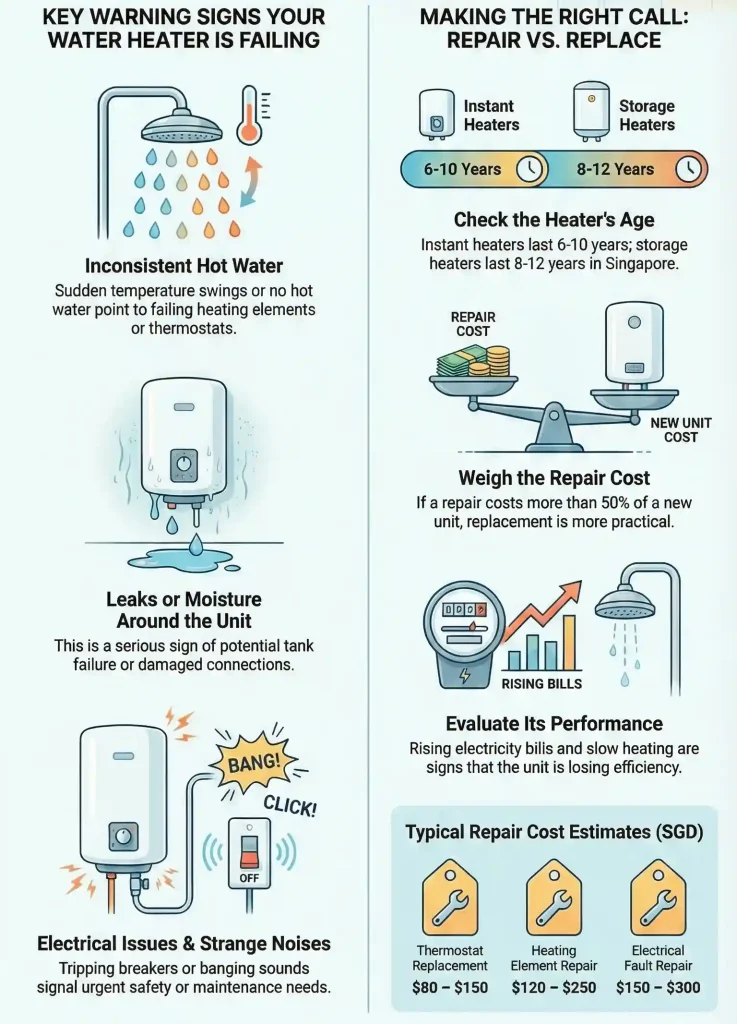
If hot water stops flowing completely or turns cold without warning, this often points to electrical or heating element problems. In instant heaters, this may be linked to circuit failure. In storage heaters, the thermostat or heating coil may no longer work correctly. Temperature fluctuations during showers should never be ignored, as they often indicate internal wear.
Water Not Hot Enough or Overheating
Water that feels warm but never hot enough may mean the thermostat is failing or mineral deposits are blocking heat transfer. On the other hand, overheated water is a safety concern and can lead to pressure buildup inside storage tanks. Both situations require professional inspection to prevent further damage.
Strange Noises Coming From the Heater
Popping, banging, or humming sounds usually come from sediment buildup inside storage tanks. As water heats up, trapped minerals create pressure and noise. These sounds are early signs that maintenance or repair is needed. Ignoring them can shorten the lifespan of the heater.
Water Leaks or Moisture Around the Heater
Leaks are one of the most serious warning signs. Small drips may come from loose pipe connections or valves, while larger leaks often indicate internal tank damage. Any moisture around the heater should be treated as urgent, especially in bathrooms with electrical fittings. For emergency leak situations, professional help from Plumber Singapore can prevent further damage to walls, ceilings, and flooring.
Rusty, Cloudy, or Smelly Hot Water
Discolored or foul-smelling hot water is often caused by corrosion inside the tank or a worn-out anode rod. This issue is common in older storage heaters and usually signals that the heater is nearing the end of its life. Repair may help temporarily, but replacement is often the safer long-term option.
Burn Marks, Tripping Switches, or Electrical Smells
Burn marks near the heater, frequent circuit trips, or burning smells are serious safety risks. These signs suggest electrical faults that can lead to fire or shock hazards. In such cases, the heater should be switched off immediately and checked by professionals.
What Causes Water Heater Problems in Singapore
Several local factors contribute to frequent water heater issues in Singapore homes. High humidity increases moisture exposure around electrical components. Hard water leads to faster mineral buildup inside tanks and heating elements. Poor ventilation and lack of regular servicing also speed up wear and tear.
Should You Fix or Replace the Water Heater?
Many homeowners in Singapore struggle with the decision of whether to fix a water heater or replace it. This usually happens when the heater still produces some hot water but shows clear signs of wear. Making the wrong choice can lead to repeated breakdowns, higher electricity bills, and safety risks. The right decision depends on how old the heater is, how often it fails, how much repairs cost, and how efficiently it operates.
How Often Do You Need to Replace the Water Heater in Singapore?
Water heaters in Singapore are used almost every day, which shortens their working life compared to regions with cooler climates. Instant water heaters typically last between six to ten years, while storage water heaters can last eight to twelve years with proper care. If a heater has reached these age ranges and starts failing regularly, replacement becomes more practical than repeated repair. Many people ask how often they need to replace the water heater, and the answer is usually when repairs become frequent and performance drops.
Age and Overall Condition of the Heater
The physical condition of the heater plays a major role in deciding whether to repair it. A relatively new heater with a single faulty component is usually safe to fix. However, an older heater showing rust, corrosion, or electrical instability is a safety concern. In Singapore homes, heaters installed for many years often suffer from internal wear caused by mineral deposits and constant heat exposure. Once the tank or core components weaken, repair becomes unreliable.
Understanding Water Heater Repair Cost in Singapore
Repair costs vary depending on the heater type and the nature of the problem. Simple issues such as thermostat or valve replacement, are generally affordable. More serious problems involving electrical components or internal damage cost more and may repeat over time. When homeowners repeatedly search for water heater repair cost Singapore, it often means repairs are becoming too frequent. If repair expenses begin to approach half the cost of a new unit, replacement should be considered.
Repair Costs Versus Replacement Value
Comparing repair costs with replacement value helps prevent unnecessary spending. A one-time repair on a newer heater often restores normal function. On the other hand, multiple repairs on an older heater increase costs without improving reliability. Replacement may seem expensive at first, but it offers better performance, lower electricity use, and warranty protection. Over time, this often costs less than repeated repairs. Estimated water heater repair cost in Singapore:
| Repair Type | Estimated Cost Range |
| Thermostat replacement | SGD 80 – 150 |
| Heating element repair | SGD 120 – 250 |
| Valve or minor leak fix | SGD 90 – 180 |
| Electrical fault repair | SGD 150 – 300 |
If repair costs exceed 40–50% of replacement cost, replacement is usually the bette
Energy Efficiency and Performance Decline
Older water heaters consume more electricity because heating elements weaken over time. They take longer to heat water and struggle to maintain stable temperatures. Newer heaters are more efficient and provide consistent hot water with less power usage. If your heater causes higher electricity bills or takes longer to heat water, replacement can improve efficiency and daily comfort.
When You Should Replace the Water Heater Instead of Repairing It
There are clear situations where replacement is the safer choice. If the heater leaks from the tank, produces rusty water, trips electrical switches, or has passed its expected lifespan, repair is no longer reliable. These problems indicate internal damage that cannot be fixed permanently. In such cases, replacing the heater prevents further damage to walls, ceilings, and electrical systems.
Professional Assessment Helps You Decide Correctly
Many homeowners are unsure whether a heater can still be fixed safely. Professional inspection helps identify internal damage that may not be visible. At Plumber Singapore, trained technicians inspect heaters thoroughly and explain whether repair or replacement is the safer and more cost-effective option. This helps homeowners avoid repeated breakdowns and unexpected failures.
Water Heater Repairs, Professional Help, and Maintenance Tips
Common Water Heater Repairs Explained
Water heaters can often be repaired when problems are caught early. One of the most common repairs involves thermostats and heating elements. If water is not heating properly or the temperature fluctuates, replacing a faulty thermostat or heating element usually restores proper function. Another frequent repair is fixing minor leaks from valves or pipe connections, which prevents water damage to bathroom floors and cabinets.
In storage water heaters, sediment buildup can sometimes be removed through flushing, improving efficiency. Electrical issues, such as tripping breakers or wiring faults, are also addressed by professionals who ensure the system is safe and reliable. Even though these repairs are routine, improper handling can cause serious safety hazards, especially in humid Singapore bathrooms.
Why DIY Water Heater Repairs Are Risky
Attempting to fix a water heater yourself is not recommended. Water heaters combine electricity and water, creating a significant risk of electric shock. Even small mistakes, like incorrectly reconnecting wires or valves, can lead to permanent damage or void warranties. Many DIY attempts also fail to address the root cause of the problem, leading to recurring issues. In Singapore, plumbing regulations require certain electrical work to be performed by licensed professionals.
How to Choose the Right Water Heater Repair Service in Singapore
Selecting a trustworthy repair service is critical to avoid repeated breakdowns and additional costs. The first step is checking for licensed and experienced plumbers who specialize in water heater repair. Look for companies that handle both instant and storage water heaters, as each type has unique requirements.
Transparency in pricing and estimates is important; a reputable service provides clear cost information before starting work. Warranties on repairs and replacement parts give peace of mind in case problems reappear. Finally, consider response time and emergency support, especially if leaks or electrical faults pose immediate risks to your home.
Water Heater Maintenance Tips to Extend Lifespan
Routine maintenance can prevent the most common water heater issues and extend the unit’s lifespan. Regular inspections of valves, pipes, and electrical connections help detect problems early. Flushing storage tanks removes sediment buildup, improving heating efficiency. Cleaning and dusting around heaters, especially instant water heaters, prevents overheating. Monitoring water temperature settings reduces strain on heating elements, lowering electricity use and reducing wear. Following these simple maintenance steps ensures your water heater operates efficiently, reduces repair frequency, and saves on long-term costs.
Frequently Asked Questions
How do I know if my water heater needs fixing or replacing?
If your water heater shows persistent leaks, inconsistent temperature, strange noises, or electrical issues, it likely needs professional attention. Older heaters with repeated failures may require replacement.
How much does it cost to fix a water heater in Singapore?
Costs depend on the problem. Minor repairs, like thermostat or valve replacement, range from SGD 80–180, while electrical or internal tank repairs can cost SGD 150–300. Frequent repairs may justify replacement.
Can I fix my water heater myself?
DIY repairs are risky due to electricity and water exposure. Improper handling can cause shock, leaks, or void warranties. Always rely on licensed professionals.
What should I do if my water heater is leaking?
Turn off power and water immediately, and contact a professional plumber for inspection and repair to prevent water damage and safety hazards.
How often should I maintain my water heater?
Inspect and service your heater at least once a year. Regular maintenance prevents leaks, sediment buildup, and electrical faults, keeping your unit efficient and safe.
Why Professional Water Heater Services Are Important in Singapore
Professional repair ensures the heater is restored safely, efficiently, and in compliance with local regulations. Experts can assess whether repairs or replacement are more cost-effective, handle emergencies, and provide warranties on work. In Singapore homes, this is especially valuable because improper repairs can damage walls, floors, or electrical systems. Services from Plumber Singapore offer experienced technicians, fast response times, and reliable solutions for both instant and storage water heaters.
Final Thoughts: Fix Your Water Heater Before It Becomes an Emergency
Timely attention to water heater problems prevents costly damage, ensures safety, and maintains daily comfort. Recognizing early warning signs, understanding repair versus replacement decisions, and choosing professional services are essential steps for Singapore homeowners. Regular maintenance further extends the life of your heater and improves energy efficiency. By addressing issues early with the right guidance, you can enjoy reliable hot water without unexpected breakdowns.