
When it comes to keeping your bathroom fresh, dry, and comfortable, choosing the right ventilation fan is crucial. A proper ventilation system ensures that excess moisture from showers and baths is effectively removed, helping to prevent mold, mildew, and unpleasant odors. However, with numerous models available on the market today, how do you ensure you’re choosing the best one for your needs? What’s even more important is selecting an energy-efficient bathroom ventilation fan that can save you money on electricity bills while maintaining a healthy indoor environment.
This guide will provide expert tips and considerations to guide you in selecting the right ventilation fan for your bathroom, ensuring you make a choice that’s not only effective but also energy-efficient. Whether you’re upgrading your current fan or installing a new one, these tips will help you make the best decision for your home in Singapore.
Why You Need an Energy-Efficient Ventilation Fan
Choosing an energy-efficient bathroom fan is essential for reducing your home’s overall energy consumption. These fans use less electricity compared to standard models, which means you can keep your bathroom properly ventilated without significantly increasing your utility bills. Furthermore, energy-efficient fans are often built with advanced motor technology that improves airflow while using minimal power.
For homeowners in Singapore, the benefits of energy-efficient bathroom fans go beyond just lowering energy bills. With the nation’s focus on sustainability, using energy-efficient appliances also supports environmental conservation efforts.
Energy Efficiency Explained
When looking for an energy-efficient ventilation fan, it’s important to understand the key features that contribute to its efficiency. ENERGY STAR ratings are an excellent indicator of a fan’s efficiency. Fans with this certification are tested to ensure they meet specific energy consumption standards.
In addition to ENERGY STAR ratings, CFM (cubic feet per minute) is another important metric. CFM indicates how much air a fan can move per minute. For optimal performance, a higher CFM means more air is being ventilated, but this must be balanced with the power consumption to ensure it remains energy-efficient.
Key Considerations for Choosing the Right Energy-Efficient Bathroom Ventilation Fan
Match the Fan’s Airflow to Your Bathroom Size (CFM Calculation)
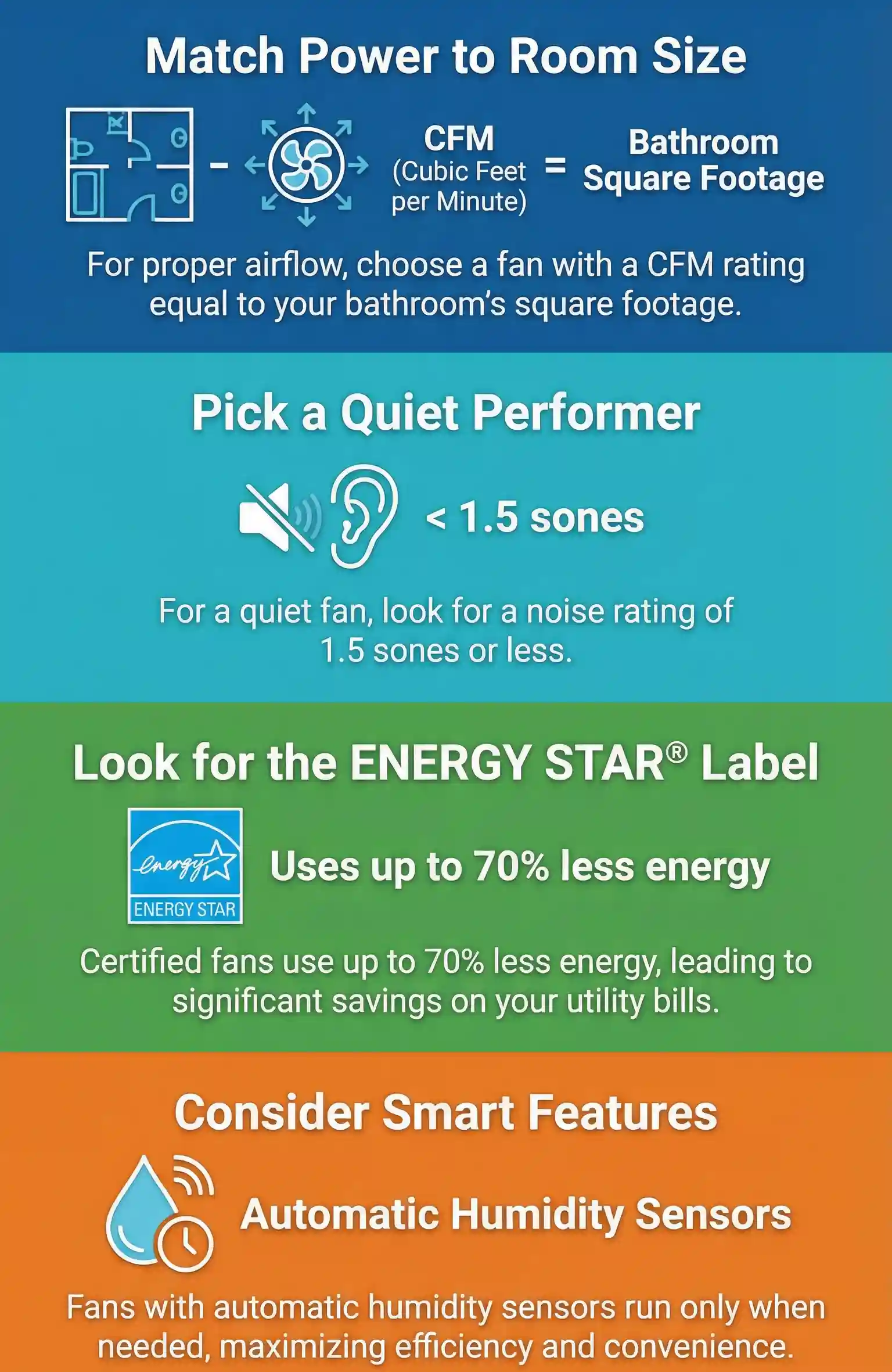
When selecting a ventilation fan, one of the first factors to consider is the CFM (cubic feet per minute). CFM measures how much air the fan moves per minute, and the appropriate amount of airflow depends on the size of your bathroom. A small bathroom will not require the same level of airflow as a larger bathroom or one with a bathtub and shower.
To calculate the right CFM for your bathroom, use this simple formula:
- Measure the square footage of your bathroom.
- Multiply the square footage by 1 CFM per square foot.
For example, if your bathroom is 50 square feet, a fan with a CFM rating of 50 would be ideal.
For bathrooms with multiple occupants or those containing a bathtub or shower, you may need to increase the CFM to account for the higher moisture levels.
Pro Tip: If you are installing a fan in a toilet or small powder room, you’ll likely need less CFM than a full bathroom, but proper airflow is still important to avoid lingering odors and moisture.
Noise Levels: Finding a Quiet Fan
No one wants a loud, disruptive fan running in their bathroom. One of the biggest factors affecting bathroom fan performance is noise levels. Noise is measured in sones, and the lower the number of sones, the quieter the fan. A fan with a rating of 1.5 sones or less is generally considered quiet, while fans with ratings above 4 sones may be noisy.
If you are sensitive to noise or installing a fan in a shared bathroom, look for a fan that operates at 2 sones or less. This will provide a good balance between efficient ventilation and a quiet, comfortable environment.
For Singaporean homes, where bathrooms are often in proximity to living spaces, choosing a quiet bathroom ventilation fan is especially important to maintain a peaceful atmosphere.
Energy Efficiency Features to Look For
When shopping for an energy-efficient fan, be sure to check for specific features that contribute to efficiency:
- ENERGY STAR Certification: This guarantees the fan meets energy-saving standards.
- Brushless DC Motors: These motors are more energy-efficient and last longer than traditional motors.
- Variable Speed Controls: Some fans come with speed controls that allow you to adjust the fan’s power depending on the level of ventilation needed.
- Automatic Humidity Sensors: Some high-end models feature automatic sensors that detect humidity levels and adjust the fan’s operation accordingly. This feature ensures the fan runs only when necessary, saving energy.
These features can make a significant difference in your fan’s energy consumption, helping you save on electricity while keeping your bathroom fresh.
Types of Energy-Efficient Bathroom Ventilation Fans
Ceiling-Mounted Fans
Ceiling-mounted fans are the most common type of bathroom ventilation fan. They are typically installed in the ceiling and can effectively remove moist air from the entire bathroom. Ceiling-mounted fans are ideal for most Singaporean bathrooms as they provide excellent coverage and are easy to install.
If you have a larger bathroom or a shower, a ceiling-mounted fan with a higher CFM rating is ideal for optimal airflow and energy efficiency.
Wall-Mounted Fans
Wall-mounted fans are a great alternative if you have limited ceiling space or prefer a different aesthetic. These fans are installed on the wall and are often used in smaller bathrooms or in situations where ceiling installation is not feasible.
Though wall-mounted fans can be effective, they may not provide the same level of airflow as ceiling-mounted fans, especially in larger bathrooms. However, they are still an excellent option for smaller spaces, such as a toilet ventilation fan installation.
Inline Fans
Inline fans are an advanced option that can be installed in the attic or ceiling cavity, with ducting leading to the bathroom. These fans are highly efficient and can provide powerful airflow without being visible in the bathroom. They are perfect for homes with larger bathrooms or multiple bathrooms.
Because of their versatility and high efficiency, inline fans are often used in commercial spaces or larger homes where effective and quiet ventilation is essential.
Remote Fans
Remote fans are similar to inline fans, but they allow for more flexible installation. The fan unit is placed away from the bathroom, and air is directed through ducts to the bathroom. These fans can be installed in areas such as the attic, providing excellent airflow while keeping noise to a minimum.
Remote fans are an excellent option for larger homes or commercial spaces where quiet, powerful ventilation is required, making them a great choice for high-end bathrooms or toilet ventilation fan installations.
Installation Tips for Maximum Energy Efficiency
Proper Installation Practices
Installing an energy-efficient ventilation fan is crucial to ensure it operates at peak performance. While it’s possible to install a bathroom fan yourself, for optimal efficiency and safety, it’s often best to hire a professional. The correct installation not only ensures proper airflow but also prevents potential issues that could arise due to incorrect placement or poor ducting.
Here are some essential installation practices to consider:
- Positioning the Fan: The fan should be installed in a location that maximizes airflow and helps remove moist air effectively. In most cases, placing the fan near the shower or bath will allow it to capture the maximum amount of humidity. Installing it on the ceiling provides an effective path for steam to rise and be expelled from the bathroom.
- Ducting and Venting: Proper ducting is critical to ensure that air moves smoothly from the fan to the outside. The duct should be as short and straight as possible, without sharp bends, to prevent airflow resistance. Additionally, ensure that the vent exhausts air directly to the outdoors. Venting into the attic or another part of the home can lead to moisture buildup, which could damage the property.
- Sealing Gaps: Any gaps around the fan or ductwork should be sealed properly to avoid air leakage. This helps the fan run more efficiently and prevents moisture from escaping into unwanted areas, reducing energy waste.
When it comes to installing a ventilation fan for your toilet or bathroom, the best location for a bathroom fan is key to maximizing its efficiency. It’s important to position the fan to provide the best coverage for your bathroom’s layout, whether it’s in the ceiling or wall.
Hiring a Professional for Installation vs. DIY
While many homeowners may consider installing the fan themselves, hiring a professional ensures that the job is done correctly. Plumbing and electrical work can be tricky, and improper installation can result in inefficiency, higher energy costs, or even safety hazards.
A professional installer will not only ensure that your fan is installed in the best possible location but will also check that the ductwork is properly sealed and that the unit is correctly wired. They will also help you choose the right type of fan for your bathroom, saving you time and effort in the decision-making process.
For those in Singapore, Plumber Singapore provides expert installation services, ensuring your toilet ventilation fan installation or bathroom exhaust system is installed correctly for optimal efficiency and performance.
Common Installation Mistakes to Avoid
One of the most common mistakes people make when installing a bathroom ventilation fan is choosing a fan with the wrong CFM rating. Installing a fan that is too weak for the space can result in inadequate ventilation, while a fan that is too powerful can create unnecessary noise and waste energy.
Another common mistake is improper ducting installation. If the ducts are too long, too narrow, or have excessive bends, they can significantly reduce the fan’s efficiency. It’s also important not to vent the fan into an attic or crawlspace; always ensure it vents directly outside.
Finally, skipping proper sealing is another error. Small gaps around the fan or ductwork can cause air to leak, reducing the fan’s ability to remove moisture and odors. Sealing these gaps will help ensure the fan works effectively while maintaining energy efficiency.
Maintaining Your Energy-Efficient Bathroom Ventilation Fan
Routine Maintenance to Keep Your Fan Running Efficiently
Regular maintenance is key to ensuring your energy-efficient bathroom ventilation fan continues to operate effectively for years. Routine cleaning and upkeep will help maintain airflow, minimize noise, and ensure energy efficiency. Here are some simple maintenance tips:
- Clean the Fan Blades and Grill: Dust and dirt can accumulate on the fan blades and grill, reducing airflow and causing the fan to work harder. Clean the blades and grill every 3–6 months with a soft cloth to prevent buildup.
- Inspect the Ductwork: Over time, ducts can become clogged with debris, reducing airflow. Check the ductwork annually to ensure there is no buildup, and clear any blockages that could affect performance.
- Lubricate the Motor: Some fans have motors that need occasional lubrication. Check the manufacturer’s guidelines for the type of lubrication required and apply it when necessary. This will help keep the motor running smoothly and prevent excessive wear.
By regularly cleaning and maintaining your fan, you can extend its lifespan and keep it running efficiently, saving on energy costs.
Troubleshooting Common Issues
While maintenance is key, it’s also important to address common issues that might arise with bathroom ventilation fans. Below are some common problems and how to resolve them:
- Reduced Airflow: If you notice the fan is no longer removing moisture as effectively, it could be due to dust buildup or blocked ducts. Check the fan blades and ductwork for obstructions and clean them if necessary.
- Unusual Noises: If the fan starts making strange noises, it may be due to a loose or dirty motor, or the blades may be out of alignment. Ensure the motor is clean and lubricated, and check the fan blades for any damage.
- Fan Not Turning On: If the fan doesn’t start when you turn it on, check the circuit breaker to make sure the fan is receiving power. If there’s no power, you may need to call an electrician to inspect the wiring.
If you’re unsure how to troubleshoot your ventilation fan for a toilet or bathroom, or if you encounter any issues that require professional assistance, don’t hesitate to contact Plumber Singapore for expert help.
Energy-Saving Tips for Extended Fan Lifespan
In addition to routine maintenance, there are a few simple ways to reduce energy consumption and extend the lifespan of your bathroom fan:
- Use a Timer: Install a timer switch for your fan so it runs only for the necessary amount of time after a shower or bath. This prevents unnecessary energy use and ensures the fan doesn’t run longer than needed.
- Automatic Humidity Sensors: If your fan has an automatic humidity sensor, it will turn on and off based on the moisture level in the bathroom. This ensures the fan only operates when necessary, saving energy.
- Switch to a More Efficient Model: If your current fan is outdated or inefficient, replacing it with a newer, more energy-efficient model can help reduce energy consumption while improving performance.
By following these simple tips and maintaining your fan properly, you can ensure it operates at maximum efficiency while extending its service life.
The Benefits of Choosing an Energy-Efficient Ventilation Fan
Cost Savings on Energy Bills
One of the most significant advantages of choosing an energy-efficient bathroom ventilation fan is the potential for cost savings. Energy-efficient models use less electricity than traditional fans, which means you’ll see a reduction in your monthly utility bills. While energy-efficient fans may have a slightly higher upfront cost, they will pay for themselves over time through lower energy usage.
For example, an ENERGY STAR-certified fan consumes up to 70% less energy compared to non-certified models, which can lead to substantial savings on your electricity bill.
Environmental Impact and Sustainability
In Singapore, where environmental sustainability is a priority, choosing energy-efficient appliances helps reduce your carbon footprint. By opting for an energy-efficient bathroom fan, you’re contributing to the global effort to reduce energy consumption and minimize greenhouse gas emissions.
Moreover, many energy-efficient fans are built to last longer, reducing the frequency of replacements and minimizing waste. This contributes to sustainability by promoting the use of longer-lasting products and reducing the environmental impact associated with manufacturing and disposal.
Improved Indoor Air Quality and Comfort
Energy-efficient ventilation fans not only help reduce energy consumption but also improve indoor air quality. By maintaining optimal humidity levels, these fans prevent the growth of mold and mildew, which can lead to respiratory issues and other health problems. Proper ventilation also helps eliminate odors, creating a more comfortable and pleasant bathroom environment.
Whether you’re installing a fan in a small toilet or a larger bathroom, the benefits of choosing an energy-efficient ventilation fan extend far beyond just cost savings; they also contribute to better health and well-being for you and your family.
Frequently Asked Questions
How do I know if my bathroom fan is energy-efficient?
Look for the ENERGY STAR certification, which indicates that the fan meets strict energy efficiency standards. Additionally, fans with low-wattage motors, brushless DC motors, and variable speed controls are typically more energy-efficient.
What’s the best type of fan for a small bathroom?
For a small bathroom, a ceiling-mounted fan with a lower CFM rating should suffice. It’s essential to select a fan that provides sufficient airflow for the space without being overly powerful. A fan with a rating of 1.5 to 3 sones is ideal for maintaining a quiet environment.
Can I install a ventilation fan myself?
While DIY installation is possible, it’s often recommended to hire a professional to ensure the fan is properly installed. A professional can help with proper ductwork, vent placement, and electrical connections, ensuring the fan operates at its peak efficiency.
What is the ideal CFM for a bathroom with a shower?
A bathroom with a shower typically requires a CFM rating of 1 CFM per square foot of bathroom space. However, if your bathroom is larger or has multiple occupants, you may need a higher CFM for adequate airflow.
How do I reduce bathroom fan noise?
To reduce fan noise, choose a fan with a low sones rating (preferably under 2 sones). Additionally, ensure the fan is installed correctly, as loose parts or improper installation can contribute to unwanted noise. Using higher-quality, quieter models will also minimize sound levels.
Conclusion
Choosing the right energy-efficient bathroom ventilation fan can seem like a daunting task, but with the proper knowledge, it doesn’t have to be. By considering factors like airflow (CFM), noise levels, energy efficiency, and installation placement, you can select a fan that fits your bathroom’s needs and helps to reduce energy costs.
Remember, a well-ventilated bathroom not only improves air quality but also prevents mold and mildew growth, keeping your home healthier. By investing in an energy-efficient fan, you’ll enjoy long-term savings while contributing to environmental conservation efforts.
If you’re ready to install or upgrade your bathroom ventilation fan, or if you need help with installation, maintenance, or repairs, Plumber Singapore is here to help. Our team of professionals can guide you through the process, ensuring your fan is energy-efficient, effective, and installed correctly.
With the right fan, your bathroom will stay fresh, dry, and comfortable, while saving energy and reducing your carbon footprint. Make the right choice today for a cleaner, healthier home.